Saturday, October 08, 2016

How The Police Caught Speeders In 1895

Alexander Gütermann was the proud owner of a “Benz-Motor-Pferd”, a belt-driven car. He could afford it - he was the owner of Gütermann Ltd, a manufacturer of sewing yards and twines and threats. In comparison, if he would have lived today, he would be driving a Tesla. He loved to speed and did not care much about the maximum speed limit of 6 kilometer per hour. The police gave him several times an official warning.

That did not stop Alexander to take his car on the sunny afternoon of May 15, 1895 for a spin in Waldkirch, a small town near Freiburg. He was happily speeding when the police caught him in the act.  So how did the police measure his speed before radar speed guns were invented? Well, more by keen observation; Alexander was driving at such a high speed that “curtains of the local pub were fluttering”. The fiend! He got a speeding ticket of 3 DM, not a small sum at the time. (It was the daily wage of a miner at the time).

In case you wonder, he never crashed the car. It can still be admired in the PS.Speicher bicycle & car museum in Einbeck, Germany. In 2015, it even took part in the traditional car rally from London to Brighton.

The original speeding ticket is show below.


Wednesday, June 29, 2016

The German academic who ghostwrites for academics - Clever business, but morally…

Want to graduate but don’t want to write your thesis? No problem! If you study in Germany, you can hire the enterprising Ms. Eva Nowak. She runs a thriving business ghostwriting theses. Ms. Nowak started with helping graduates with their academic research. She soon found out that writing their theses (for a fee of course) presented a unique business opportunity.

She currently has a staff of Ph. D. academics in various fields, including law and social science. The work involves research and writing without (oh, irony) copying existing theses and sources that are IP protected.

Ms. Nowak operates in a grey area; it’s her students that are facing repercussions when caught, not her since she only facilitates. Interviewed on German television, one of her customers justified her hiring Nowak to help her graduate with flying colors a follows: “My dad passed away, I have three small kids. It was impossible to keep up.”

Nowak emphasized that people turn to her not because they are lazy, but since circumstances forced them. She did not address the ethical issue at any time during her TV interview.

I have my own take on this. For one, writing a thesis is a wonderful exercise that forces you as an academic to focus, study, research, analyze, execute, follow up, write, present and defend. It build skills that are priceless is anyone’s career.

Taking the “Nowak Shortcut” gives the “cheater” an unfair advantage over all those that put their own efforts in their theses. Furthermore, the ethics of such a person are questionable to say the least, so any university or employer should think twice before hiring such a person.

As for Ms. Nowak, she does not lose any sleep over it. She rakes in Euro 40 per page, which totals Euro 4,000 for a standard 100-page thesis. Not bad, since the turnaround time is 4 weeks. I calculate her monthly income at Euro 16,000 up.

My advice to universities and employers: let potential employees sign a statement that they never, ever, used ghostwriting and/or third party services to obtain and/or contribute to their academic credentials including, but not limited to, ghostwriting their theses…..all at the risk of being fired and facing a hefty penalty fee.

This blog post was written by Debra De-Jong, who wrote her own thesis all by herself (as it should be).

(Image courtesy of RTL Nord

Wednesday, May 04, 2016

How Stairway to Heaven turned into Highway to Legal Hell

Randy Wolfe used to be the guitarist of Spirit and composed the number Taurus for the band in 1967. Wolfe aka Randy California was also hired by other bands to write songs. In 1971, Led Zeppelin made music history with its “Stairway to Heaven” which was written by Robert Plant and Jimmy Page. The track features on Led Zeppelin’s untitled fourth studio album, often referred to as “Led Zeppelin IV”.

Michael Skidmore, a trustee for the late Randy Wolfe, is suing Led Zeppelin for copyright infringement. Skidmore claims that Plant and Page wrote “Stairway to Heaven” for Led Zeppelin after hearing Spirit perform Taurus while both bands were touring together in 1968-1969. According to Skidmore, Led Zeppelin never gave Wolfe any credit for his contribution. Skidmore states that the first two minutes of Stairway to Heaven are identical to those of Taurus. According to the lawsuit, Wolfe complained about the similarities of the songs in 1997 shortly before his death in an interview.

US district judge Gary Klausner found that there are indeed enough “substantial”’ similarities to warrant a court case. He pointed out those first two minutes are “arguably the most recognizable and important segments” of the songs.

While it is true that a descending chromatic four-chord progression is a common convention that abounds in the music industry, the similarities here transcend this core structure,” the judge wrote. “What remains is a subjective assessment of the ‘concept and feel’ of two works ... a task no more suitable for a judge than for a jury.” (Skidmore also wanted to sue Led Zeppelin bassist John Paul Jones and Warner Music Group, but those claims were thrown out of court).

Led Zeppelin’s lead singer Robert Plant and guitarist Jimmy Page don’t have a choice; they must appear in court (scheduled for June 14) to defend themselves against the claim that they infringed Wolfe’s copyright. For now, they take the view that Wolfe was a songwriter-for-hire and had no copyright claim to begin with. Furthermore, they point out that the chord progressions are so common, that those cannot be protected by copyright anyway. They have a point: “Sonata di Chitarra, e Violino, con il suo Basso Continuo” written by Italian Baroque guitar player and composer Giovanni Battista Granata (1620-1687), features the Stairway to Heaven melody.


Even if the jury would decide in favor of the Wolfe, Skidmore as the trustee would only get up to 50% of any damages awarded, due to the terms and conditions of the contract that Wolfe signed way back in 1967. According to Skidmore and his lawyer Francis Malofiy, it’s all about getting credit. “This case, from our perspective, has always been about giving credit where credit was due, and now we get to right that wrong.” It’s not that simple - once an artist is credited, he or she is automatically entitled to part of the proceeds.

For Led Zeppelin, its iconic Stairway to Heaven had turned to a Highway to Legal Hell courtesy of a bar-brawling lawyer.

Saturday, April 02, 2016

Snapchatter beware - Making a screenshot of other people's Snapchat pictures and videos could be illegal

Snapchat, the social media platform that deletes posts after 10 seconds, is a firm favorite of people sending pictures and videos to friends. However, a follower could make a screenshot of an embarrassing selfie or pic, which means that it will be around forever.

Needless to say, this is highly embarrassing for the “victims” - if they wanted it to be around, they would have used Facebook, Instagram or Flickr. But there is more to it; making a screenshot could also be illegal.

Ed Vaizey, the UK's Culture Minister, stated that if a Snapchat user saves someone else's picture and shares it again without their permission, they are leaving themselves open to being sued under British copyright law.

This makes sense, since selfies and images are protected by IP laws. Once someone shares Snapchat content of other users without their permission, that person infringes on their copyright and therefore could be sued.

As the minister explained: "Under UK copyright law, it would be unlawful for a Snapchat user to copy an image and make it available to the public without the consent of the image owner. The image owner would be able to sue anyone who does this for copyright infringement.”

Snapchat photos are automatically deleted after 10 seconds. The Snapchat privacy policy states that if Snapchat is able to detect that a recipient has taken a screenshot of an image, they will try to inform the original poster. Needless to say, Snapchat advises users to avoid messages which they would not want to be saved or shared.

Bottom line: it’s better to be safe than sorry. Do not post, share or pin any image that could be considered to be sexual, obnoxious or embarrassing. Be aware that reposting, sharing or repinning such an image without permission makes you liable. In the UK, that would mean up to two years imprisonment. The current maximum penalty for copyright infringement in the UK is up to 10 years in prison and an 'unlimited' fine.

Ergo, caveat usarius Snapchati!

Monday, January 18, 2016

Rabobank Persuades the Courts to Ban Publication of Its Art Practices

It reads like a great novel – The Pledge (De Verpanding) by Paulien Derwort. The book claim that "everything seems legitimate when hunting for the artworks”.

;

According to the book, Rabobank committed art theft, encouraging its bank employees to hunt for the art collections of its art dealer clients. The narrative tells the true story of two clients of the Foundation Residual Debt Fair Share. The art dealers fell victim to the Rabobank department which 'deals' with entrepreneurs in financial distress. Ms. Derwort claims in the book that Rabobank used all kinds of tricks to fleece those clients resulting them being stuck with mounting debts..

The book concentrates on two entrepreneurs ran into financial trouble:. Mr. Wim Koperberg, an art dealer, and Ms. Tessa van Veen, who runs the Collection Hopster Van Goudzwaard Foundation together with her husband. They claim that Rabobank was able to dissolve their complete capital, and plundered and stole. “If I would have any money left, I would have sued them for theft, fraud. Abuse of ‘care obligation’, abuse of lien, and unethical behavior.”

The plot thickened when “bank critic” George van Houts.decided to release the names of Rabobank employees in question, stating that ”These gentlemen believe that they are acting on behalf of Rabobank, turning off their conscience. They believe that they remain complete anonymous ... Where have we heard that before? "

Needless to say, Rabobank took action, and sued Van Houts. During the court hearing, one of the Rabobnk employees stated that he and his colleague were “angry and hurt” by the publication. He stated that his job is “intensive and involves making tough decisions”, and that he works as an Rabobank employee and not as a private person. He told the court that he feels that it is unacceptable that his name and that of his colleagues is “dragged through te mud” based on so many false facts.

The District Court agreed and ruled that the book “De Verpanding” should not have mentioned any individual Rabobank employee by name. The ruling forced the publisher not only to recall all copies already in bookshops, but also those already purchased by readers.

Due to the controversy, the book has been sold out and is a collector’s item.The reputation of the Rabobank department has suffered; more people have come forward claiming to be victimized by “the bloodhounds”.

Thursday, December 17, 2015

The Rich Are At It Again; Cheating on Their Taxes - The Bar Refaeli Story

There is a long list of celebrities who cheated on their taxes. Considering their net income, it’s quite amusing that they avoid paying taxes since they are not exactly poverty-stricken.

The latest culprit is Israeli supermodel Bar Refaeli. The woman dodged serving in the army by entering into a fake marriage, so it should not come as a big surprise that she stiffed her government who uses the funds to protect its citizens with e.g., iron dome.

Bar Refaeli tried to weasel out of the allegations by claiming that she lived abroad. Well, that did not exactly fly - the Israel Tax Authority had the woman arrested for allegedly evading millions of dollars in taxes. She was grilled for 12 hours.

As a supermodel, she received a lot of freebies for which she should have paid income tax on. She didn’t, just enjoying her perks such as luxury apartments and cars without any accountability. The woman also stayed in luxury apartments registered under her mother and brother’s names, and also used Range Rover and Lexus cars free of charge. The Israel Tax Authority notices that she enjoyed unreported income amounted to “dozens of millions of shekels.”

The Refaeli women defended themselves, claiming that the model lived outside of Israel. Needless to say, that did not fly. The Israel Tax Authorities were not amused, showing that DiCaprio’s ex and her Mummy enjoyed “celebrity discounts” such as free interior decorating, which they never reported.

The homes of both Refaeli women were raided this week. On Thursday, they were arrested and released on bail. They were forced to fork over their passports and can’t leave Israel without permission for 180 days. Quel horreur!

Moral of the story - don’t cheat on your taxes! It’s just not worthwhile. Tax authorities all over the world have long memories, unlimited resources, and the tenacity to hunt you down. Do yourself a favor, just pay your dues - especially if you are an egomaniac celebrity! (Or any member of their money-hungry posse)

(Image courtesy of K Bar from TA, IL at Flickr)


Monday, December 14, 2015

Could Dutch Police Be Allowed To Hack Suspects Very Soon?

A new Dutch law proposed to the Dutch parliament would allow Dutch police to hack suspects (yes, even via WhatsApp!). Needless to say, it created a firestorm. Those opposing it consider the concept law to be a breach of privacy, while supporters applaud it as an important step towards security. The main question is: why is this new law necessary? And what does this Hack Law entail?

Funny enough, nobody really knows. Although the new Hack Law has been announced by the government, the Dutch House of Representatives still has to approve.

What is known, that the police should have extensive leeway to hack suspects as part of the broader picture to fight terrorism. Furthermore, the threshold for allowing police hacking should be low in order for it to be effective.

However, some academics, such as Professor Nico van Eijk, reason that hacking is not really an anti-terrorism measure. (Personally, I disagree).
De Dutch intelligence services AIVD and MIVD that are fighting terrorism, are already allowed to hack. Therefore, granting the same rights to the police would just be an extension of an existing and accepted practice.

It is not clear yet what the parameters for hacking by the police will be. Funny enough, the proposed concept is already two years old; the threshold for tapping into Internet and telephone traffic is therefore far from new.

Opponents of the concept law claim that the police could use security vulnerabilities in software on the devices of suspects. That might be true, but security vulnerabilities could also be used by hackers; just compare it to a faulty lock on your windows that allows crooks as well as the police to easily enter your premises.

Will the concept law pass? Quite likely, considering the recent attacks in Paris and Beirut.

This blog post was written by Debra De-Jong of Tip Top Lawyer

Sunday, November 29, 2015

Who Owns the Intellectual Property of Emails?

In this digital age, it’s a burning question - who owns the right of the content of an email?

First of all, we have to distinguish between owning the email (substantial right) and having an IP right (immaterial right).

This is not just legalese babble - to illustrate: a printed photo on a canvas will let the person own the canvas with image, but not the IP rights to that image.

To enjoy the benefits of copyright protection, a work needs to meet several conditions.

1. The work result from a creative activity
2. The work must be expressed in a physical form
3. The work must be original
When it comes to emails, the first and the third requirements are hard to meet. Just to illustrate, an email that states that a head of state is a #@!$%&! is hardly the fruit of creativity. Moreover, the content is quite likely not even original but harvested from social media

When we look at ownership, we are also in a gray area. Your email is on your computer, so you (and your heirs in case you keel over) own it. However, your rights are limited by those of third parties, namely those of the sender of the email and/or its employees (especially if it concerns a public company).

Furthermore, emails in general do not fall in the category of “confidential information”. However, depending on specific content, they could be considered to be confidential. This is normally the case for emails that contain information that could harm the company if made public.

 Last but not least: let’s discuss privacy. Does making the email public harm anyone’s privacy? If an email reveals private information, it’s an infringement. If the information is already in the public domain, not so much.

Please note that we are dealing with a grey area here. If you are a company and you are not sure, consult a lawyer. It’s worthwhile!

Disclaimer: This blog post was written for general information purposes only, and is not aimed at giving any legal advice in any way, shape or form.

©2015 Tip Top Lawyer

Tuesday, November 03, 2015

Be Careful Whom You Review - Amazon Is Suing Fiverr Reviewers for False Reviews

It seems like a dream come true. To promote your business or product, you turn to Fiverr et al and purchase the services of review writers to hammer out and post great endorsements for your product and/or services.

A true win-win, agreed? Not exactly, Amazon got wind of the fake reviews and took action. It is suing 1,114 people that it suspects of posting fake reviews on its website, stating: "While small in number, these reviews can significantly undermine the trust that consumers and the vast majority of sellers and manufacturers place in Amazon, which in turn tarnishes Amazon’s brand."

In its lawsuit, Amazon names 1,114 defendants as “John Does” (which I assume also includes “Jane Does”). The reason for that is simple: Amazon does not know their real names, since many suppliers on Fiverr use a “username” to sell their services. It seems that there are a slew of providers on Fiverr.com who offer to write and distribute false reviews. More the pity, since my own experience with Fiverr for graphic design and video clips has been more than excellent! Amazon has also included the defendants' account pseudonyms in its law suit, just to be safe. In general, the company is seeking a judgement to uncover those real identities.

Amazon explains its legal action by stating: "Amazon is bringing this action to protect its customers from this misconduct, by stopping defendants and uprooting the ecosystem in which they participate.”

This legal action is just the latest in a slew of Amazon law suits against several websites suspected of selling fake reviews. As a lawyer and entrepreneur, I don’t blame Amazon at all. Let’s face it - Amazon has been working hard to achieve high quality of service (QoS), and individuals/companies buying rave reviews does not help (to say the least!).

Fiverr itself is not being sued and works together with Amazon to solve the problem. In the complaint, Amazon made it clear that it is not blaming Fiverr. “Although Amazon has successfully requested removal of similar listings from Fiverr in the past, the removal of individual listings does not address the root cause of the issue or serve as a sufficient deterrent to the bad actors engaged in creating and purchasing fraudulent product reviews.”

Needless to say, Fiverr is not happy as well and stated: "We have worked closely together to remove services that violate our terms of use, and respond promptly to any reports of inappropriate content. We facilitate close to a million transactions a month, across more than 100 categories of services, such as graphic design, copywriting, voiceover, multimedia editing and coding. These services are being consumed by businesses who depend on them to thrive."

To read the full court filing, follow this link Amazon Complaint

Debra De-Jong - Owner of Tip Top PR and Tip Top Lawyer

Friday, October 30, 2015

In Case You Ever Wondered - A Tablet Is a Computer, Not a Communication Device

You might scratch you head why this variation of “to be or not to be, that’s the question” is relevant. As it turns out, it’s extremely important as the following story will show you.

Way back in 2010, the Dutch branch of RTL wanted to do something nice for its 664 employees and gave each one of them a brand-new iPad as a Christmas present. As the saying goes: “no good deed goes unpunished” and RTL was hit with a tax bill of over Euro 320,000. The reason: the Dutch Tax Authorities decided that the free iPad fitted in the category: “computers and similar devices” which would mean that RTL had to pay income tax on it.

This came as a nasty surprise to RTL that assumed that an iPad should be considered as a ‘telephone, internet and similar communication device’, which is exempted from Dutch income tax.

Needless to say, the iPad story ended up in the Dutch courts. The District Court ruled that the iPad is indeed more a computer than a communication device. The Court of Appeal overruled this decision and ruled that the iPad is in fact a communication device since “inserting the text alone on a touchscreen is already a daunting task, which shows that a tablet is indeed different from a computer. The main purpose of a tablet is to communicate”. Ergo, the Dutch Tax Authorities could kiss their income tax revenues goodbye.

The Dutch Tax Authorities did not take this lightly and turned to the Dutch Supreme Court. This body only rules on principles of law. This means that they are never confused by facts, but need to decide the following: is an iPad under the law a computer or a communication device?

RTL got the short end of the stick: the Dutch Supreme Court ruled that the tablet is (fiscally speaking) not a communication device, but a computer. According to the Dutch Supreme Court, it is not relevant at all what characteristics could apply (a not so supple dig at the ruling of the Dutch Court of Appeal). The Dutch Supreme Court reasoned that according to the law, the first consideration should be if the device could be classified as a ‘computer’. Only if it is clear that this would not be case, should one consider if the iPad might classify as ‘communication device’.

According to the Dutch Supreme Court, jurisprudence indicate that the term ‘computers and similar devices’ entail ‘electronic equipment that entirely or partly are designed for task

s that can also be conducted by a computer’. The legislator quoted examples such as digital calendars, mini notebooks and GPS tracking devices. The Dutch Supreme Court ruled that an iPad fits this description perfectly, and the tablet therefore does not qualify as being a communication device.

This landmark ruling will have far-reaching consequences for many employers - they can expect hefty income tax bills from the Dutch Tax Authorities.

This blog post is based on articles translated from Dutch to English by Tip Top Translator and edited by Tip Top Lawyer

Friday, May 29, 2015

Investigating the Case of the Earliest Known Murder Victim

A 430,000-year-old skull discovered in a Spanish cave bears evidence of deliberate, lethal blunt force trauma, illustrating that violence has been a fundamental part of human nature since the beginning of times. Now there is evidence to back it up.

In a cave in northern Spain, archeological detectives discovered the remains of a 430,000-year-old skull bearing what appears to be lethal, deliberately inflicted blunt force trauma. If the scientists’ interpretation of the wound is accurate, the skull represents the earliest known murder.

To piece this dark story together, an international team of researchers had to assemble the evidence—literally. The ancient hominin skull, called Cranium 17, was discovered broken into 52 pieces, buried under layers of clay in a deep pit within a cavern in the Atapuerca Mountains. The specific site in question, Sima de los Huesos (“Pit of Bones”), was discovered in 1984 and contains the remains of at least 28 early Neanderthal individuals from the Middle Pleistocene, a period ranging from about 781,000 to 126,000 years ago.

The only way to access the site is through a vertical chimney that extends more than 40 feet straight down. Scientists are not certain how the bodies came to be there, but many suspect that they were purposefully deposited. Although little is known about Cranium 17, including the gender of the person it once belonged to, this skull stood out from all the other remains found in the pit. Scientists determined that the person died as a young adult, and the skull features two prominent holes in what once was the forehead, just above the left eye socket.

To read the full article, click on http://www.smithsonianmag.com/science-nature/investigating-case-earliest-known-murder-victim-180955409/#qyiYmBmlqdrEVZjd.99

(Iimage courtesy of Javier Trueba/Madrid Scientific Films)

Saturday, January 31, 2015

Artist Gets The Upper Hand Against Fast-food Giant Chik-fil-A – With Kale

Who knew that kale could trigger legal action? It all started way back in 2000. Bo Muller-Moore is an artist located in Montpelier, Vermont. One of his farmer friend (who grows the leafy vegetable aka as kale known for its nutritional value) asked him to make three T-shirts for his family for $10 each. He did and the “eat more kale” caught on.

With approval of the farmer friend, Muller-Moore began putting it on clothing and bumper stickers. He has been using the phrase ever since to promote local agriculture. He prints the phrase in silk-screen on T-shirts and sweatshirts and also prints it on bumper stickers that are used all around Vermont and even in other states. In the summer of 2011, Muller-Moore decided to trademark the phrase.

Once fast-food giant Chik-fil-A learned about the filing, it sent Muller-Moore a letter telling him to stop using the phrase, claiming that it would confuse the public since the Chik-fil-A slogan is "eat mor chikin." The fast food giant cited 30 examples of other companies and individuals who wanted to the "eat more" phrase and withdrew it after Chik-fil-A objected.

In contrast to other before him, Muller-Moore did not cave in. He stated "In our case, we said we're not going to cease and desist until a federal judge tells us to and as far as the trademark goes, I never wavered from the idea that I deserved protection from copycat artists."

His public fight drew the support of Shumlin as well as a team of pro-bono lawyers, including law students from the University of New Hampshire legal clinic.

The U.S. Patent and Trademark Office granted Muller-Moore his application to trademark "eat more kale".

Needless to say, the artist was over the moon, stating "I'd like to think that maybe some persistence and polite defiance, you know, and proving to them [the U.S. Patent and Trademark Office] that we were in it for the long haul. If it took us a decade, we're going to fight for a decade."

Muller-Moore is not alone in relishing his David vs. Goliath victory. Governor Peter Shumlin for one applauds the decision. He stated: "The message is out: Don't mess with Vermont. And don't mess with Bo. This isn't just a win for the little guy who stands up to a corporate bully; it's a win for our state. In Vermont, we care about what's in our food, who grows it, and where it comes from."

(Image courtesy of Bo Muller Moore)

Saturday, November 01, 2014

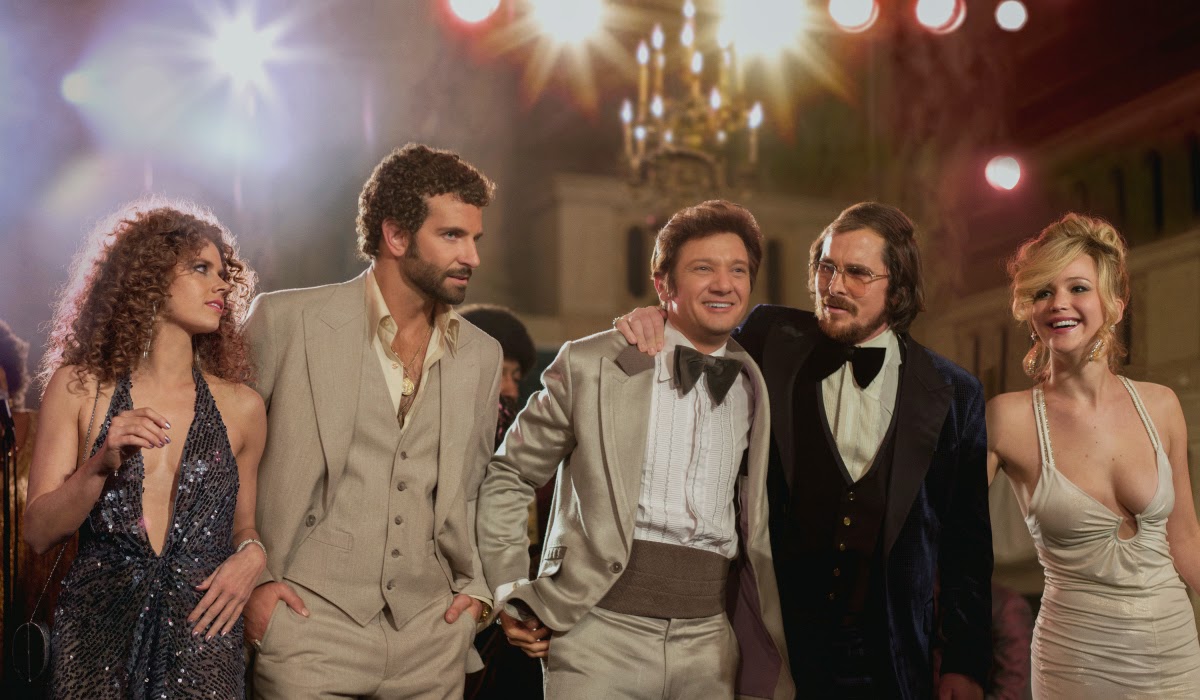
Why Former New Yorker Writer Paul Brodeur Launched A $1 Million Libel Lawsuit against “American Hustle” Producers

American Hustle is a popular movie produced and distributed by ColumbiaPictures, Atlas Entertainment and Annapurna Pictures. The flick was inspired by the FBI’s two-year ABSCAM operation of investigating public corruption.

In the movie, con man Irving Rosenfeld is forced to work for FBI agent Richie DiMaso. Rosenfeld (played by Christian Bale) is told by his wife (played by Jennifer Lawrence) that microwaves take the nutrition out of food. Rosenberg replies that it’s nonsense. She replies that an article by Paul Brodeur proves her point.


The real Paul Brodeur, a science journalist who was a staff writer at The New Yorker for nearly 40 years, was not amused. Although he has written books such as The Zapping of America (which warns about the dangers of microwave radiation), he has never stated that microwaves take nutrition out of food. He therefore filed a lawsuit at the Los Angeles Superior Court.

In the lawsuit, Brodeur argues that the statement made about him in the movie causes him damage since that statement is “scientifically unsupportable.” He argues that the filmmakers therefore damaged his reputation since “The scene from the movie American Hustle where the defamatory statement was made is highly offensive to a reasonable person.”

Brodeur states that he therefore was the victim of libel, defamation, slander and false light. He seeks damages to to amount of $1 M.

Although it seems to be a clear win for Brodeur, it might be a bit more complicated. The American Hustle filmmakers purposefully maintained that the movie was loosely based on true events. The movie’s opening credits state that “some of this actually happened.” A successful libel claim can show that the defendants made a statement in their movie as being true although they know it’s false.

Paying Brodeur would not be a problem; the movie grossed more than $150 million in the US alone. But up till now, defendants have not tried to settle. Atlas has declined to comment, and Annapurna and Columbia have not responded at all. It looks like parties will slug it out in court.

(Image courtesy of Francois Duhamel - Sony Pictures/AP)

Thursday, October 23, 2014

The legal Concept of "Fair Use"

Web designer, bloggers, content writers, journalists, professors/teachers and comedians want to use stunning images, photos, quotes or statements that were created by others. When is it legal to use such content without asking permission or payment?

That is decided by “fair use”. In legal terms: “Fair use was created to allow use of copyright (sic) material for socially valuable purposes such as commentary, parody, news reporting, education and the like, without permission of the copyright holder.”

In plain English: “fair use” allows people or companies to use those materials (text, images, photos, etc.) without it being an infringement of copyright. In such cases, the owners of those copyrighted work must allow their work to be used by designers, bloggers, content writers, journalists, teachers, comedians, etc. without any legal or financial obligations. It must be noted that the burden of proof is the one using it; not the owner of the work. (In legalese: “affirmative defense”)

The reason for “fair use” is to allow reasonable and limited use of the copyrighted work. A journalist is allowed to quote from a newly published novel in the review it. A comedian can quote from copyrighted text, use a copyrighted picture or photo or directly quote a celebrity to make fun of them. Teachers and professors can use passages of copyrighted works to explain something to their students or to make a point.

As a rule of thumb, using text under “fair use” normally consists of using a small part of the copyrighted work and includes crediting the author (with a link to the source/author’s website). Fair use is for non–commercial purposes.

The criteria of what is “fair use” are defined in the opinion of the famous Joseph Story in Folsom v. Marsh, 9 F.Cas. 342 (1841). This so-called Four Factor test consist of:

1. the purpose and character of the use (non-commercial, educational, parody or non-profit)

2. the nature of the copyrighted work

3. the amount and substantiality of the portion used of the copyrighted work

4. the effect of the market use / market value of the copyrighted work

Saturday, October 11, 2014

Why the Lawyer cum Champion of the Fictional Black Peter Called It Quits

The lawyer acting as the Erin Brockovich of the (fictional) Black Peter stopped being part of the movement that strives to rectify the image of Black Peter.

For those of you not familiar with the Black Peter phenomena – let me explain. According to folklore, Saint Nicholas travels every year from his palace in Spain to the Netherlands by steamboat, to have his servants (Black Peters) climb roofs and stuff presents down the chimney, or to climb down the chimneys themselves stuff presents for children down chimneys. In short, Black Peter is the equivalent of an Santa elf in the US. Each Black Peter has his own job; there is a Head Peter (manager), Navigation Peters (to navigate the steamboat from Spain to the Netherlands), Packing Peters (for wrapping the presents), etc. Over the years, Black Peter has a valued assistant of the absent-minded Saint Nicholas.

For the last few years, the “anti-Black Peter” movement has been striving to adjust the appearance of Black Peter by getting rid of his skin color and curly hair.

Frank King is a lawyer of Suriname origin who became the figurehead of the anti-racist movement to take down the stereotype of Black Peter. However, this came with a price. He ended up being exposed to rants of people wanting to keep the Black Peter persona. On top of that, his activism also gobbled up “an enormous amount of time”.

He made legal history with a landmark ruling. A Dutch District Court ruled that the prominent role that Black Peter plays in the entrance of Saint Nicholas infringes on the civil rights of persons of color. The District Court argued that although the servant and the saint might be fairy tale characters for many people, the appearance and behavior of Black Peter could be perceived as persons of color being subservient and simpletons.

King was proud of his achievement. “The District Court made it very clear that Black Peter is racist that nobody can deny anymore. Black Peter must change. The dark skin color has to go, as well as the curly hair.”

King was replaced by white civil rights lawyer Wil Eikelboom. King was disappointed that a white lawyer took over. He stated: “I am a person of color. I empathize with those sentiments. That is crucial for a court case like this, since it’s also about emotions.”

Frank King is convinced that the demise of Black Peter is only a matter of time. He predicts that “Within a couple of years, there will be no more Black Peters whatsoever."

Let’s see what will happen in the coming months!

(Image courtesy of photographer Peter Dejong)

Saturday, August 30, 2014

Dutch Cable Companies Must Keep on Paying Royalties to Dutch Screenwriters

The district court of Amsterdam has ruled that Dutch cable companies must pay royalties to Dutch screenwriters. This also applies for online viewing sites such as NPO.

In October 2012, three Dutch cable companies (UPC, Ziggo and Delta) had stopped paying royalties to LIRA, the Dutch writers guilt. The cable companies argued that since they already paid to TV networks and film producers, they already paid for the royalties.

The court rejected this defense, since screenwriters are members of and represented by LIRA that can claim royalties on behalf of her members. Almost all screenwriters are members of LIRA (Stichting Literaire Rechten Auteurs).

The ruling is a major victory for writers. A recent research conducted by the Network of Screenwriters (professional organization of screenwriters) among writers of youth drama shows that half of those writers could not survive without those royalty payments.

Franky Ribbens serves on the Board of Directors of the Network of Screenwriters. He writes highly popular TV shows such as Hollandse Hoop and Penoza

Ribbens stated: “This ruling marks an important victory for filmmakers. They will finally be able to share in the substantial profits of billions of Euros that companies such as UPC and Ziggo generate with the distribution of their films and TV series. Although the royalty payments will only be a fraction of the total turnover of those companies, for many writers it is an indispensable source of income to survive.”

(Image courtesy of WFI)

Sunday, August 24, 2014

Agloe – A Mapmaker’s Protection Against Copycats


Making maps is painstaking work. Mapmakers throughout the ages have been victims of copycats passing their painstaking work off as their own. So how can you prove that someone ripped off the map that you made?

Simple: by adding a fake hamlet! In the 1930s, Otto G. Lindberg was the director of the General Drafting Co. Together with his assistant Ernest Alpers, he created a road map of New York State. To prevent copycats from ripping off their map, they added a totally fictitious place that they named "Agloe" on a remote dirt road. The name is in itself quite brilliant: it’s a mix of their initials OGL (Otto G. Lindberg) and EA (Ernest Alpers).

Lo and behold – the “trap” worked. The map company Rand McNally issued its own New York state map featuring "Agloe." Lindberg promptly sued.

But Rand McNally’s legal defense team came up with an interesting defense. The legal eagles pointed out in court that there was a shop called “Agloe General Store” nearby. Ergo, it must have gotten its name from a nearby village.


The owners of the shop looked at a map distributed by Esso, which owned a plethora of local gas stations. Esso had originally purchased its map featuring Agloe completely legally from Lindberg and Alpers. The store owners assumed that since Esso’s map features Agloe, they might as well name their shop after it. Oh, the irony!

Fast-forward to the 21st century. The all-knowing Google Maps shows Agloe as a destination (including directions!) until recently. Only in 2014 was the Agloe myth exposed and expunged from Google maps.

After 80 years, Agloe has disappeared from the maps. I am pretty sure that AGL and OE up there are laughing their heads off! As for Rand McNally, the company was finally exposed as the map pirate it was.

Sunday, August 17, 2014

The Lawsuit Against Kim Kardashian That Has a Bite To It

Kim Kardashian, despite having a healthy chuck of disposableincome from whatever source, does not always pays her bills. Seems to run in the family – little Sis also skipped on paying her dinner bill of $ 33 at MercerKitchen.

In 2001, KK went to Dr. Craig Gordon to have her silver fillings replaced with porcelain ones. After nasal-voice Kardashian refused to pay her bill, the dentist tried everything to get paid.

In 2002, Dr. Gordon got a default judgment for $1,605.73. Still, Calabasas Kim refused to pay. One decade later, the debt has increased to $3,320.48 due to accumulated interest.

Being quite resourceful, the dentist filed a lien on anything Kim would recover from her divorce from husband #2 or #3 aka Kris Humphries to settle her debt. But that didn’t work either.

The dentist is now sinking his teeth in a new way to recoup payment: he is selling the court judgment he got against the reality showchick for $13,000. That makes absolute sense considering her fame/notoriety level. It’s a brilliant move – anyone who loves/hates KK, will be too happy to fork out the money to be able to cash a check directly from the debtbeat K-clan member.

Friday, July 04, 2014

Google Wants to Trademark the Word "Glass"

Google wants to trademark the word “Glass” for its computer-powered glasses. The company has already successfully trademarked the term “Google Glass”. It now wants to trademark the single word “Glass” featuring a distinctive font to make it unique.

The U.S. trademark office has refused to do so. The grounds are obvious:

  1. The suggested trademark is too similar to other existing or pending computer software trademarks (e.g., Microsoft's SmartGlass) that contain the word “glass”. This is a main ground for rejection since it would confuse customers or consumers.
  2. Even when “Glass” would have a distinctive format or lettering, it would still remain “merely descriptive.” Generic terms cannot receive trademark protection under federal law. 
For more details, click here

Trademark attorneys for Google, Anne Peck and Katie Krajeck from Cooley LLP, claim that Google’s proposed trademark does not confuse consumers, especially given how much media and policy attention the Glass device has received in the last couple of years.

They also argued that “the frame and display components of the Glass device do not consist of glass at all,” but are made from titanium and plastic. The word “glass” would therefore not “inform potential consumers as to the nature, function or use” of the product Google is selling.

However, Google could skirt the issue by marketing its device as “Google Glass”. But that would limit its possibilities of successfully suing competitors for IP infringement. Google lists Glass in its trademarks list as “Glass™ wearable computing device".

Wednesday, May 28, 2014

Rowen Seibel Sues Busoness Partner ‘Dictator’ Gordon Ramsay for $10.8M

Celebrity chef Gordon Ramsay is in hot water. His business partner Rowen Seibel (owner of the popular Upper East Side restaurant Serendipity 3) is suing him for $10.8 million. According to the filed Manhattan civil suit, “Gordon Ramsay attempted to run the business and make decisions … similar to his television personality on Hell’s Kitchen — as a dictatorship, without the proper authority and without consent of his partner.”

Mr. Seibel owns the Serendipity chain of restaurants and invested $800,000 to open Fat Cow together with Ramsay in September 2012 based on a 50/50 partnership.

Ramsay insisted on naming the new venture Fat Cow, although he knew that this would create trademark issues with a Florida restaurant that already had rights to the same name in Spanish — Las Vacas Gordas.

According to court papers, Ramsay assured Seibel not to worry about the name, bragging, “Don’t worry, I’m the trademark queen”.

But less than two years after opening, Ramsay announced — without consulting his partner — that he would shutter Fat Cow, citing the trademark problems.

According to the lawsuit, Ramsay also used his personal interior decorator for the LA space and turned the restaurant into a TV studio for his reality show “Hell’s Kitchen”.

In his lawsuit, Seibel states: “Ramsay fraudulently induced Seibel to invest over $800,000 in Fat Cow Restaurant — an investment that went towards an expensive build-out of the lease space with a new kitchen, new fixtures and furnishings, and to train the restaurant staff — but then intentionally forced Fat Cow Restaurant to close so that he could use Seibel’s investment to benefit another Gordon Ramsay restaurant”.

The lawsuit also claims that the celebrity chef is planning to reopen a second eatery in the same location with the same staff – under the name “Gordon Ramsay at the Grove” or “GR Roast”.

Seibel wants his investment back plus $10 million in damages for Ramsay’s “egregious misconduct, fraud, self-dealing and theft of corporate opportunity.”

A Ramsay spokeswoman responded: “We’re surprised that Mr. Seibel has the audacity to file this ridiculous suit when he and his team were responsible for the day-to-day running of The Fat Cow and spectacularly mismanaged it, resulting in a string of financial and legal issues. Gordon Ramsay and his team immediately stepped in and tried to resolve these issues, but Seibel refused to engage in any meaningful conversations, rendering the restaurant unsustainable.”

Stay tuned!